What is Narmada Parikrama?
Narmada Parikrama is a sacred pradakshina (circumambulation) of the Narmada River, revered in Hindu tradition as Narmada Maiyya (Mother Narmada) and also known as Reva in scriptures.
Unlike pilgrimages that end at one temple, Narmada Parikrama treats the entire river as the living deity: devotees travel along both banks, starting at the river’s source and returning to the same point after completing the full circuit
Where does the Narmada start and end?
• Amarkantak (Madhya Pradesh) is popularly regarded as the source region of the Narmada, with the sacred Narmada Kund associated with the river’s origin.
• The river flows west and meets the sea through an estuary in the Gulf of Khambhat, near Bharuch (Gujarat) the turning point for most Parikrama routes.
The non negotiable rules and why they exist
These rules are the heart of Narmada Parikrama. They are not “tips” they define the pilgrimage.
Rule 1: Do not cross the Narmada (except at the mouth/estuary as tradition allows)
The core discipline is to walk along the riverbanks without crossing the river during the Parikrama, preserving the integrity of the circumambulation.
Rule 2: Keep the river on your right (pradakshina discipline)
Parikrama is traditionally a clockwise circumambulation; many traditions describe keeping Narmada on the right as part of the sacred discipline.
Rule 3: Live simply (food, conduct, and humility)
Many pilgrims observe a simple lifestyle: vegetarian food, minimal belongings, and respectful conduct because the Parikrama is meant to cultivate detachment and devotion.
Why rules matter (practical + spiritual): They reduce distractions, protect safety in difficult stretches, and keep the focus on devotion rather than “tour mode.”
Route structure:
The standard “two bank” design (easy to visualize)
1. Start at Amarkantak (source region).
2. Travel downstream along one bank (often described as the Dakshin Tat / South Bank route).
3. Reach Bharuch / Gulf of Khambhat estuary (sea confluence point).
4. Cross at the mouth/estuary as per local tradition and return upstream on the opposite bank (often described as the Uttar Tat / North Bank route).
5. Complete the circuit back at Amarkantak.
Key spiritual & planning stops (entities with meaning)
Use these as “anchors” for your planning (not as a rushed checklist):
• Bhedaghat (Jabalpur): known for the marble rocks gorge and river scenery often a major landmark for pilgrims.
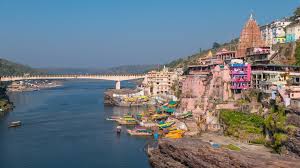
• Omkareshwar: a prominent island temple region on the Narmada and a major pilgrimage point.
• Maheshwar: historically known for ghats and temple life on the riverbank, often included as a key halt.
• Bharuch: the estuary/sea meeting point used as the turning milestone for the return bank.
Best time to do Narmada Parikrama
Simple rule that works for most people
October to February is widely considered the easiest season for walking: cooler temperatures and more comfortable conditions for long daily distances.
Spring (March–April) can work for some, but heat rises quickly afterward; monsoon months are typically more challenging due to rain, slippery paths, and higher water levels.
How long does it take?
1) Traditional Padyatra (on foot)
Many sources describe the full Parikrama as a journey of several months, with common planning ranges around 3–6 months, depending on pace, halts, and discipline.
2) Vehicle assisted or “short circuit” options
Some pilgrims do shorter, vehicle supported circuits in a few weeks (often cited around 15–45 days depending on route and stops). This is less traditional than full padyatra but is used by working professionals and seniors who still want the spiritual arc.
Honest guidance: Choose the mode that lets you maintain devotion and safety. A rushed plan often becomes physically exhausting and spiritually thin.
Rituals, dress, and daily rhythm (keep it simple and respectful)
A simple daily spiritual routine (easy to follow)
• Morning: bathe or do achaman (as appropriate), offer a short prayer to Narmada Maiyya, and begin walking early
• Daytime: pause at ghats/temples for brief darshan; keep halts purposeful.
• Evening: light a lamp (deepdan where suitable), do a short aarti/namaskar, and rest.
Dress (practical, pilgrimage appropriate)
• Wear modest, breathable clothing and carry layers for early mornings and winter.
• Footwear: if you are not going barefoot, use sturdy walking shoes; long stretches can include uneven terrain.
Do’s & Don’ts (common mistakes first timers should avoid)
Do
• Start early each day and keep a steady pace; this improves safety and reduces exhaustion.
• Use known ghats, ashrams, and established paths—especially in forest/rural stretches.
• Carry basic medicines, water, torch, and a power bank; remote sections can be long.
Don’t
• Don’t attempt river crossings at unmarked spots; currents and terrain can be deceptive.
• Don’t walk isolated stretches at night; safety risks rise significantly.
• Don’t treat Parikrama as a sightseeing checklist—its power comes from discipline and devotion.
Planning checklist
1. Pick your season: Oct–Feb for best walking comfort.
2. Decide mode: full padyatra (months) vs vehicle assisted (weeks) based on fitness and time.
3. Lock your start point: Amarkantak (most common source start) or a chosen ghat with sankalp.
4. Create a safety plan: daily check ins, avoid night walking, follow recognized ghats/routes.
5. Keep it seva first: let your planning reduce friction so the journey stays spiritual, not stressful.
Where Sahajdarshan fits
Sahajdarshan can support pilgrims with seva first planning, route clarity, pacing, stay guidance, and etiquette so you can focus on devotion and safety through the journey.
Narmada Parikrama is a pilgrimage where the discipline is the blessing: staying close to the river, honoring the rules, and walking with humility turns a long route into a life clearing spiritual practice. When you plan the season, pace, and safety well, the Parikrama becomes calmer, safer, and more transformative.