If you are planning the Char Dham Yatra, this guide gives you a complete, practical roadmap: what Char Dham is, the correct route order, best time to go, darshan and puja rituals, dress and packing, and how to plan safely—especially for families, seniors, NRIs, and foreign travelers who want a respectful spiritual journey.
You will also learn why the route is traditionally done clockwise (Yamunotri, then to Gangotri, then to Kedarnath and finally to Badrinath) and how to avoid common mistakes that make the yatra stressful.
What this article covers (quick overview)
- What is Char Dham Yatra
- The four dhams and what each represents
- Best time & season windows
- Route order + planning durations
- Dress, packing, darshan etiquette, and puja rituals
- Registration and safety
Core concept: What is Char Dham Yatra?
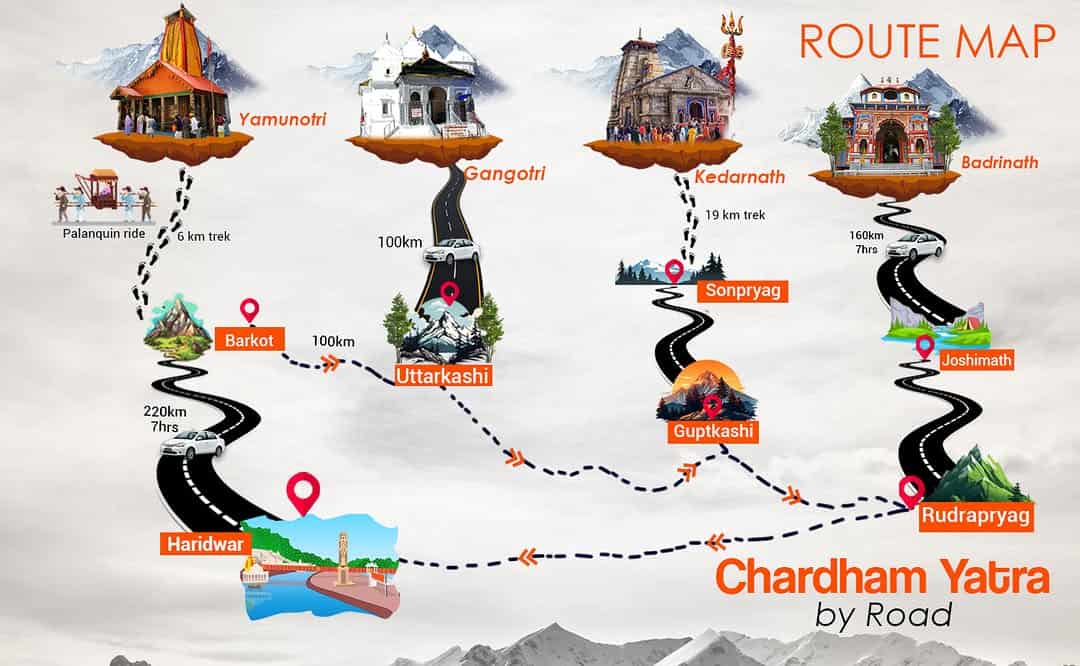
Char Dham Yatra (Uttarakhand), often called the Himalayan Char Dham, is one of the most sacred Hindu pilgrimage circuits in India, located in Dev Bhoomi Uttarakhand (the “Land of Gods”). It includes four high‑altitude Himalayan shrines: Yamunotri, Gangotri, Kedarnath, and Badrinath.
The four dhams (what they are and why they matter)
- Yamunotri: The shrine dedicated to Goddess Yamuna, near the source region of the Yamuna river; pilgrims often experience the temple area along with hot springs used for simple ritual offerings.
- Gangotri: The shrine dedicated to Goddess Ganga, associated with the spiritual origin zone of the Ganges in the Himalayas.
- Kedarnath: A major Shiva temple and one of the 12 Jyotirlingas, reached via an uphill trek from Gaurikund; it is central for devotees seeking inner purification and surrender.
- Badrinath: A major Vishnu temple (Badrinarayan) and a key Vaishnav pilgrimage site; due to Himalayan weather, it is typically open only for part of the year.
Step‑by‑step deep dive: Route, Darshan flow, and why the order matters
What is the correct Char Dham route order?
Traditionally, Char Dham is completed clockwise in this order:
Yamunotri then Gangotri thereafter Kedarnath finally to Badrinath.
Why this order helps (practical and spiritual):
- Geography & logistics: this sequence reduces backtracking in the mountains and keeps travel legs more logical.
- Spiritual arc: the yatra begins with the sacred river origins (Yamuna, Ganga), moves into austerity and inner work (Kedarnath), and culminates in balance and grace (Badrinath).
How many days are needed?
A realistic planning frame (most common):
- Standard road yatra: ~10–12 days (buffer days highly recommended)
- Senior‑friendly pace: ~12–15 days (less fatigue, more recovery time)
- Helicopter yatra: often designed as ~2–5 days depending on operators and weather windows
Practical advice: Plan at least 1–2 buffer days for weather and road delays in the Himalayas. This reduces anxiety and improves the spiritual experience.
Best time to do Char Dham Yatra (and what to avoid)
Season window (simple, reliable rule)
The Char Dham shrines are typically open for about six months, generally opening in April/May and closing around October/November, depending on weather and temple calendars.
Best months (comfort + safety)
- May to June: stable weather and easier road conditions for most travelers.
- September to early October: clearer skies after monsoon, often less crowded than peak summer.
Monsoon caution (July–August)
Monsoon can bring landslides and road disruptions in Himalayan regions. If you must travel in this season, keep larger buffers and monitor official advisories closely.
Practical planning: registration, permits, transport, stays
Registration
Uttarakhand provides an official portal for Char Dham Yatra registration, and it explains registration and verification steps for pilgrims. Use the official registration site for the most current rules and updates.
Common start points
Most road itineraries start from Haridwar / Rishikesh / Dehradun as gateways into the Garhwal Himalayas
Trek reality
- Kedarnath requires an uphill trek from Gaurikund (often cited around ~16–17 km) and is not directly road-accessible, so footwear, pacing, and hydration matter.
- Yamunotri also involves a trek from the base area (often via Janki Chatti), so keep time for ascent and descent.
Dress, puja rituals, and darshan etiquette (what to wear and how to behave)
Dress (keep it simple and respectful)
- Wear modest, layered clothing (mountain weather changes quickly).
- For temples: covered shoulders/legs is a safe standard; carry a light shawl.
Basic puja rhythm (what most devotees do)
At each dham, many devotees follow a similar rhythm:
- Snan / purification (where applicable and safe)
- Darshan (main goal: peaceful, unhurried)
- Simple offerings (flowers/prasad as per local custom)
- Aarti timing (if attending, arrive early and follow instructions)
Keep rituals simple and sincere. In high altitude, physical comfort supports spiritual focus.
Do’s & Don’ts (mistakes first‑timers should avoid)
Do
- Plan buffers (weather and road conditions can change quickly).
- Start early each day; daylight and mountain roads favor early movement.
- Hydrate and pace at altitude, especially for Kedarnath trek.
- Use the official registration portal for current requirements and verification steps.
Don’t
- Don’t treat Char Dham like a “quick sightseeing sprint”—fatigue increases risk and reduces the spiritual value.
- Don’t ignore monsoon warnings; landslide-prone stretches can disrupt plans.
- Don’t overpack; carry only what you can manage comfortably during treks.
Actionable next steps (simple planning checklist)
Use this mini checklist before you book anything:
- Choose your window: May–June or Sep–early Oct (best balance).
- Decide pace: standard (10–12 days) vs relaxed (12–15) vs heli (2–5).
- Confirm registration rules on the official portal.
- Plan for trek days (Kedarnath + Yamunotri) with realistic rest and buffer.
- Set a “seva-first” intention: keep rituals simple, respect local instructions, and prioritize safety.
Where Sahajdarshan fits
Sahajdarshan can support your Char Dham planning with a seva-first approach, helping you align route, pacing, stays, and practical guidance so the yatra feels spiritually focused rather than logistically stressful.
Char Dham Yatra is not only a journey through the Himalayas, it is a carefully sequenced spiritual arc across sacred rivers, austerity, and grace. When you plan the timing, route order, and pace thoughtfully, the yatra becomes safer, calmer, and more transformative.